Pages
Wednesday, March 23, 2016
Unit 8 Reflection
Monday, March 21, 2016
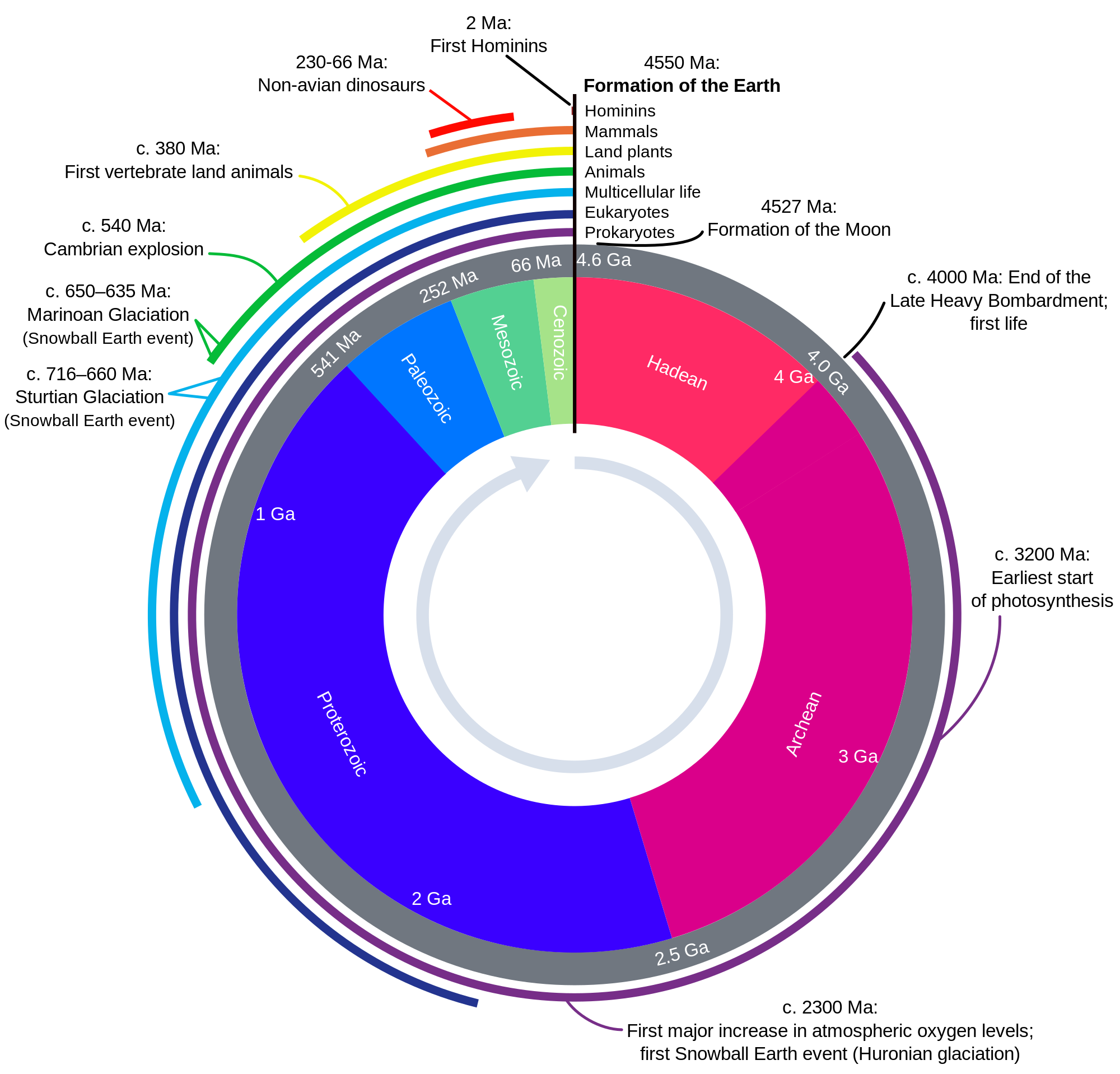
Geological Timeline Reflection
Monday, March 14, 2016
Getting One Step Closer to Curing Color Blind Eye Deficiency #2
For the past few weeks I have been doing a lot of research on what causes color blindness and what an eye looks like without that deficiency. I started to make a presentation but I soon then realized that making a model would express my 20 time project even more. Last week, I started to make a blueprint for the model. I concluded that I will be making two designs of an eyeball. One design will be a normal vision eyeball and the contents of what it can do to make you see color. For the second design it will be the same size as the other design but inside the model, there will be a display of what makes you color deficient. Right next to that model, there will be a levitating contact lens showing what a laser incision may do to help color blindness. Obviously, the model contact will not look like a laser but it will act as a display. I have been studying what type of contacts I may use. I am still on the fence about it but this is a struggle for me to find out if I want a contact that will be on the eye or inserted inside (laser). Overall, I am on a successful track that will soon lead me to my end product. For the next week, I will be working on the blueprints and I will find out more about different contacts. This concludes my second blog post
Friday, March 11, 2016
Hunger Games Analysis Questions
1. In this lab, my class and I went outside and simulated a real world population survival between different organisms/species. How we survived in the lab was by "eating" and "reproducing" in order to continue this so lifestyle. There were three groups of species in the lab: pinchers, knucklers, and stumpys. Overall, we tested out how populations evolve over time also known as natural selection.
2. The phenotype that was the best at capturing food was the "Pinchers" in which they can pick up the food between their thumb and index finger and they had an advantage of using both hands to grab food quite easily. The frequency of the "A" allele drastically changed as the lab continued (50% to 16%) while the "a" allele frequency increased significantly (50% to 83%).
3. The population definitely evolved throughout this simulation experiment and we know that because the population of the "stumpys" decreased due to having a difficulty in retrieving food by the wrists in which the population started to die out. With that, the "knucklers" and "pinchers" had an advantage over each generation. The frequency of the "A" allele drastically changed as the lab continued from .5 to .16, while the "a" allele frequency increased significantly from .5 to .83.
4. When doing this experiment, some random events occurred when it came to reproducing and how much a pocket can fill up with the "food". When reproducing, the "species", my classmates and I, chose who we reproduced with and it varied quite a lot along the way. The random moment with carrying the food was uncontrollable due to people having bigger pockets than others and the mobility. The nonrandom moment was how everyone picked up food, the specific species, throughout each generation. The random moments definitely effected the population in which one "pincher" classmate had a harder time picking up food.
5. The results would definitely be different if the food was larger than the corks, such as a softball. If the food was as large as a softball, the "A" allele frequency would be a higher percentage than the "a" allele frequency due to "stumpys" having a bigger advantage than the "knucklers". If this occured in an environment, the three different species may migrate to the different areas to get the food that will be easier for them to consume.
6. The results will be different, if there was no incomplete dominance, "knucklers". That would mean that there would be no knucklers in which in the end of each generation, the stumpys would decrease significantly.
7. The relationship between natural selection and evolution is that natural selection is the mechanism that drives evolution while evolution is the genetic makeup of a population over time.
8. Strategies that individuals adopted throughout the experiment includes how some species decided to mate with the pinchers in order to have the likelihood of survival for their offspring and using shirts as an advantage to achieve more food.
9. In evolution, the whole population evolves and natural selection acts on both genotype and phenotype, with that, my justification for this is revealed through my graph.
10. If this lab continued, would the allele frequency reach a limit?
2. The phenotype that was the best at capturing food was the "Pinchers" in which they can pick up the food between their thumb and index finger and they had an advantage of using both hands to grab food quite easily. The frequency of the "A" allele drastically changed as the lab continued (50% to 16%) while the "a" allele frequency increased significantly (50% to 83%).
3. The population definitely evolved throughout this simulation experiment and we know that because the population of the "stumpys" decreased due to having a difficulty in retrieving food by the wrists in which the population started to die out. With that, the "knucklers" and "pinchers" had an advantage over each generation. The frequency of the "A" allele drastically changed as the lab continued from .5 to .16, while the "a" allele frequency increased significantly from .5 to .83.
4. When doing this experiment, some random events occurred when it came to reproducing and how much a pocket can fill up with the "food". When reproducing, the "species", my classmates and I, chose who we reproduced with and it varied quite a lot along the way. The random moment with carrying the food was uncontrollable due to people having bigger pockets than others and the mobility. The nonrandom moment was how everyone picked up food, the specific species, throughout each generation. The random moments definitely effected the population in which one "pincher" classmate had a harder time picking up food.
5. The results would definitely be different if the food was larger than the corks, such as a softball. If the food was as large as a softball, the "A" allele frequency would be a higher percentage than the "a" allele frequency due to "stumpys" having a bigger advantage than the "knucklers". If this occured in an environment, the three different species may migrate to the different areas to get the food that will be easier for them to consume.
6. The results will be different, if there was no incomplete dominance, "knucklers". That would mean that there would be no knucklers in which in the end of each generation, the stumpys would decrease significantly.
7. The relationship between natural selection and evolution is that natural selection is the mechanism that drives evolution while evolution is the genetic makeup of a population over time.
8. Strategies that individuals adopted throughout the experiment includes how some species decided to mate with the pinchers in order to have the likelihood of survival for their offspring and using shirts as an advantage to achieve more food.
9. In evolution, the whole population evolves and natural selection acts on both genotype and phenotype, with that, my justification for this is revealed through my graph.
10. If this lab continued, would the allele frequency reach a limit?
Friday, March 4, 2016
Bird Beak Lab Conclusion!
In this lab, we asked the question "If natural selection occurs in a population, how do changes in selective pressure affect the evolution of that species?". My hypothesis for part 1 of the lab was " If there are winners and losers, then tweezers will win due to gaining most food while spoons will lose having difficulty with obtaining food". My group and I tested the 4 beaks and the tweezers had the most food in which it gained 38 chicks while the spoon beak only gained 10 chicks. In the end of part one, we found out that both scissor and tweezer beaks are the winners while spoon and binder clip beaks are the losers. The tweezers had more grip on the fake food while the spoon had no grip and very little chance with scooping up the little rubber pieces. This data supports my claim because my hypothesis was correct in the end giving me an understanding of how different phenotypes work in nature.
For part 2, we asked the same question but with a change in how many items you need to survive (10 pieces of food instead of 5) for each viable offspring. My group and I found out that this will make it harder to survive for all 3 years making each type of beak have less offspring. Tweezers still had the most offspring with the number of 13 while the spoon beak did not survive withing the first year with having not count of food in which that meant that there would be no future for the spoon beak phenotype to thrive. This information is based on the lecture notes we had for homework for the past week. My data supports my second hypothesis which is "If we tested with the different beaks, then later on the popultation will be mostly tweezers." since the tweezer will have the most offspring to survive for the future due to the beak gripping the food with ease.
While our hypothesis supported our date, there could have been errors due to miscounting the amount of food each beak gained or if the food spills out of the lab area making it difficult to obtain food in the given time. Due to these errors, in future experiments I would recommend to count carefully and do it once or twice to make sure the amount of food you picked up is the right amount to determine if that beak phenotype will survive. Also pushing the two tables together will help prevent the loss of food that gets out of the lab-tested area.
This lab was done to demonstrate Charles Darwin's conclusions which are there are winners and losers; in the end most the population looks like the winners. From this lab, I understand more about Darwin's observations and conclusions with the help of the vodcast notes for homework that was given throughout the week. Based on my experience from this lab I already had little pieces of information that helped me comprehend what was going on through the two tests. This concludes my conclusion.
Monday, February 29, 2016
Getting One Step Closer to Curing Color Blind Eye Deficiency #1
1. 20% Time is the amount of time we have to work on the project (Mondays).
2. The essential question that I have asked for the 20 Time Project is, What can lead closer to curing color blindness?
3. For my project I have chosen to research further into making contacts that will help partially cure color blindness and with that, these contacts will help lead to the cure for color blind eye deficiency. I chose this topic because helping others interests me and making technology is one of my passions. My project answers my essential question because the answer is by making a laser-inserted contact.
4. My goals are to find the perfect type of lens for the technology needed to make this assistive device, and to make a good presentation.
5. I will measure my progress by keeping up with this daily blog and adding new things into the presentation that I have just researched.
6. My plan is to make this presentation about my project to help contribute to my Ted Talk that will be produced later on in the school year.
7. I am writing this to help spread out that the technology we have today can help along the road to make a full cure of color blindness. With that, the contacts that I would like to make will replace EnChroma's glasses for the moment.
2. The essential question that I have asked for the 20 Time Project is, What can lead closer to curing color blindness?
3. For my project I have chosen to research further into making contacts that will help partially cure color blindness and with that, these contacts will help lead to the cure for color blind eye deficiency. I chose this topic because helping others interests me and making technology is one of my passions. My project answers my essential question because the answer is by making a laser-inserted contact.
4. My goals are to find the perfect type of lens for the technology needed to make this assistive device, and to make a good presentation.
5. I will measure my progress by keeping up with this daily blog and adding new things into the presentation that I have just researched.
6. My plan is to make this presentation about my project to help contribute to my Ted Talk that will be produced later on in the school year.
7. I am writing this to help spread out that the technology we have today can help along the road to make a full cure of color blindness. With that, the contacts that I would like to make will replace EnChroma's glasses for the moment.
Wednesday, February 24, 2016
Unit 7 Reflection
Unit 7 was about ecology and how to keep our ecosystem the most healthy. Ecology is the study of interactions between organisms and their environment, with that there are many factors that decreases the health of our planet/ecosystem. Many of these factors can be resolved and with the help of other people, making our ecosystem healthy as it once was, can be possible. The most essential part of this unit is learning about biotic and abiotic factors & using that information to help keep an equilibrium.
I want to learn more about what we can do to decrease the use of plastic and wasting our fossil fuels since they can only be used once. For the moment, all my questions have been answered with the help of discussing the problem with plastic after watching the movie, Bag It. I wonder about our future, will it be different from the present or will it change completely.On our Conservation Biologist Project, everyone in my group was excellent and always on task. Our skills throughout making the slideshow met all the requirements on our contract. I learned a lot through the project and now I have more respect for our ecosystem, especially the Amazon Rainforest. After taking the self assessment, my highest score was being assertive and I believe I was an excellent collaborator with my teammates and I have to say the same for them. This concludes my Unit 7 Reflection.
Subscribe to:
Posts (Atom)