Saturday, April 30, 2016
My Inner Fish-Reflection
In class we watched a video called, "Your Inner Fish" which talks about how humans evolved from fish. The Tiktaalik was the first fish-like creature to climb out of the water and explore dry land. I found this animal to be very interesting because it was the animal that every creature was based on. A question that I would like to go further in depth with is: "What are some of the forms the descendants of Tiktaalik evolved in their limbs"? They evolved with wrists and elbows to help themselves be propped up which is also found in reptiles and mammals. I wonder if the ancient creature went onto land once then went back in water then repeated this process until they shifted their limbs to help prop them up. It would be interesting if they already had these features before that because I would think that they would have adapted before hand. Another question is: "What is the 'Sonic Hedgehog' gene responsible for"? It tells different cells to do things(hands and digits). I found this gene very interesting because of all the scientific study that went behind to discover what actually makes your fingers. This concludes my reflection.

Monday, April 18, 2016
Getting One Step Closer to Curing Color Blind Eye Deficiency #4
For the past week I have been improving and redesigning what the models may look like for my 20 Time project. I have learned more about my topic and I recently discovered what type of contact lenses I may use for the project. This is a super exciting project and throughout the time spent doing it I learned a lot more about myself and how efficient I can work on making a blueprint for the model. I have no setbacks at the moment because I finally solved my issue with the contact lenses. I plan on making a paper model due to the timing in which the project is due. Right now, I am finishing the blueprint for the model of the eye and the process is going fast. Hopefully I can get started on the model next week or maybe at the end of today. I can apply my project to the community because my idea of making contacts for color blind people will make an impact for others outside of school, etc. This concludes my blog post.
Friday, April 15, 2016
Invertebrates: Cnidaria
As one of the oldest existing animals, cnidarians are classified as Phylum Cnidaria. Jellyfishes, also known as scyphozoans, are a part of the four major classes of cnidarians and with that they are one of the most diverse living creatures to be known. Jellyfish have two body forms, the first body form is called polyps and at that stage their tentacles face upward while their second stage, medusas, form the tentacles facing downward. An interesting fact about jellyfish is that if they are in stress (in medusas) they can easily go in reverse back to polyps. Another interesting detail about these cnidarians is that they do not have a brain but they can detect changes in the environment from their nerve nets. Jellyfish come in many different shapes and size and even at the smallest size, their sting can still pack a punch. The Irukandji Jellyfish, Carukia barnesi, measure at 5 millimeters across and is one of the smallest box jellyfish in the world. They are known as the second most venomous jellyfish according to PlanetDeadly.com. These dangerous scyphozoans were first found in North Australia, but they were soon then spotted as far away as the British Isles. They are many interesting creatures in the sea, but jellyfish take the lead in one of the most beautiful but deadly sea animals. 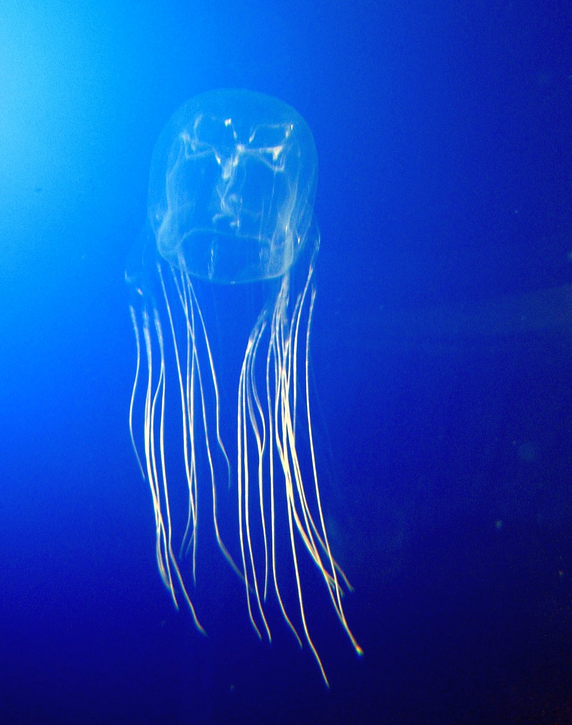
Monday, March 28, 2016
Getting One Step Closer to Curing Color Blind Eye Deficiency #3
Last week, I finished the first sketch for the first model of how an eye works and started with the another sketch for the second model. During that time I did more research for how contacts work and I am still not sure what type of contacts I will use for my project. With that, I was trying to find a diagram for what happens in the eye when there is this deficiency. What I learned from myself is that it takes a lot of research and time for this 20 Time project before you get an idea on how you should present your idea. The only setback I had was not figuring out what type of contacts would be necessary to cure this. Since I was not able to work on my project this week due to being sick, next week I will be continuing the sketch for the model. I can apply how other people feel about color blindness with my project because it gives me more motivation to work on the contacts.
Wednesday, March 23, 2016
Unit 8 Reflection
 This unit was about change within a species and the geological history behind it. Some of the essential understandings in this unit include what is the difference between natural selection and evolution, another big topic was the constant change between a species (gene pool), also this unit discussed about speciation and how it affects a population, finally the origin of life was another essential understanding. From this unit, I want to learn more about Earth's past, and the things that contributed to what our world looks like today. From my previous blog post, I made a reflection for a timeline that my group and I completed in class. With that, I wonder what the first animals looked like on Earth and how they adapted to their environment. This topic interests me a lot and I think it is great to learn about evolution in biology class. From unit 7, everyone in the class, was shown a video on how to be assertive, from that I realized that I am becoming more assertive when working on group projects. Though, I still think that I may be a little passive because I usually do not take the role as a leader when working with more than one person. In the end, as a group, my teammates and I all show assertiveness and that really does bring our whole group together making us work more efficiently with the time provided. This concludes my reflection for Unit 8.

Monday, March 21, 2016
Geological Timeline Reflection

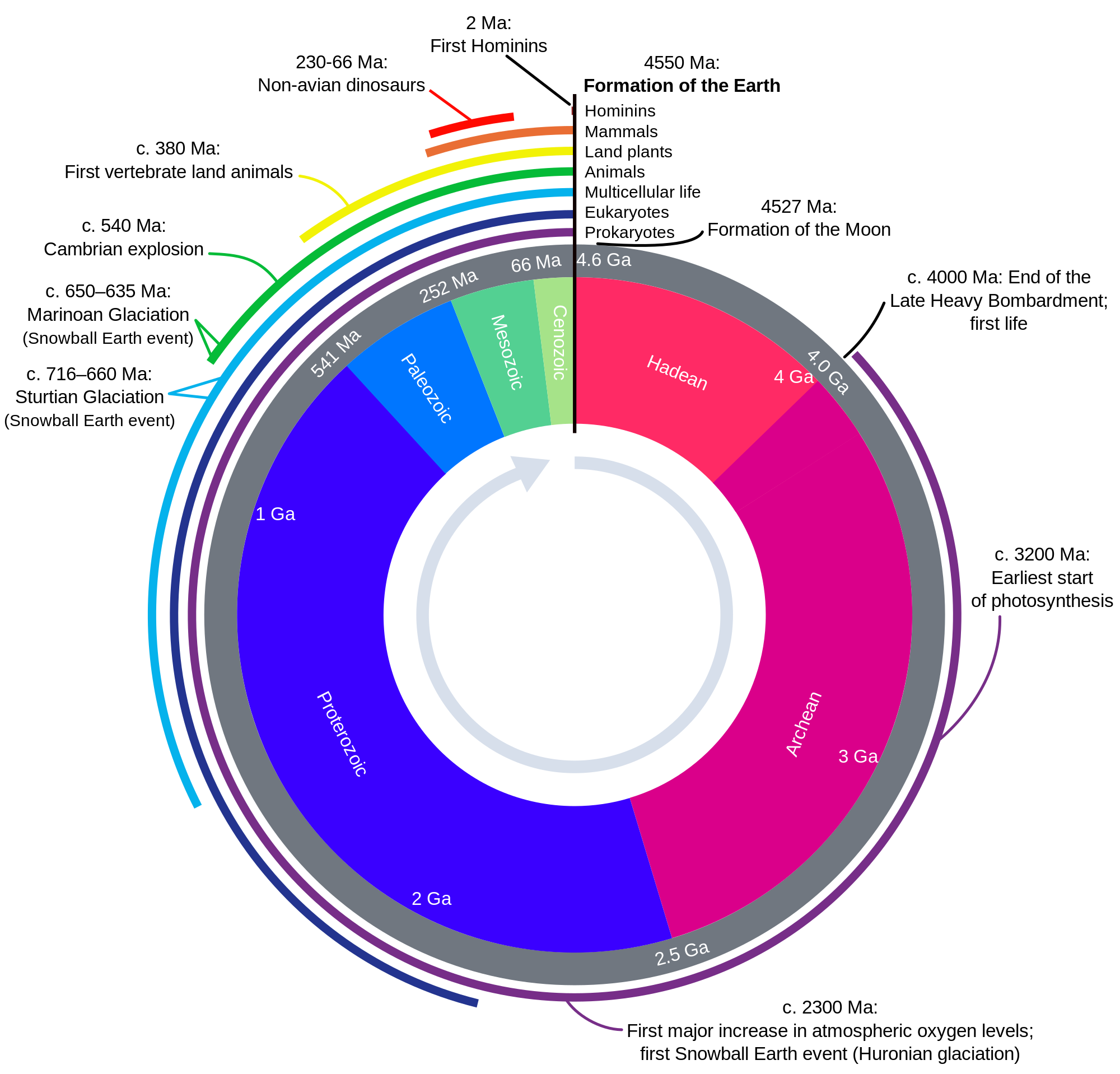 In this project we made a timeline of Earth's history on 10 meter paper. Some major events that happened in Earths history include: the birth of Earth, the first mammals, and the triassic extinction. 4.5 billion years ago, the planet that we live on was first a ball of dust and rock particles and there was attraction called gravity in which then the moon would have formed around that time of gravitational pull. About 4.2 billion years later, was when Earth had the first mammals. These mammals were spreading all around and they were rodent like creatures who were nocturnal. Though 20 million years later, there was a mass extinction that killed around 80% of the animals living and this extinction was called the Triassic extinction. This mass extinction made the large dinosaurs lead the world, they were the most dominant land animals. Earth's history definitely had many ups and downs but most of all it created life. I think of Earth's history as a scarf that is being knit. Why I say that is because there are a few little mistakes and then some big ones but it still continues in an organized order. The mass extinctions definitely surprised me when learning about the history of Earth. Humans caused the most impact on other species and plants leading them to extinction due to the necessities that we need. This is a little bit worry some because it still continues in different parts of the Earth presently.

Monday, March 14, 2016
Getting One Step Closer to Curing Color Blind Eye Deficiency #2
For the past few weeks I have been doing a lot of research on what causes color blindness and what an eye looks like without that deficiency. I started to make a presentation but I soon then realized that making a model would express my 20 time project even more. Last week, I started to make a blueprint for the model. I concluded that I will be making two designs of an eyeball. One design will be a normal vision eyeball and the contents of what it can do to make you see color. For the second design it will be the same size as the other design but inside the model, there will be a display of what makes you color deficient. Right next to that model, there will be a levitating contact lens showing what a laser incision may do to help color blindness. Obviously, the model contact will not look like a laser but it will act as a display. I have been studying what type of contacts I may use. I am still on the fence about it but this is a struggle for me to find out if I want a contact that will be on the eye or inserted inside (laser). Overall, I am on a successful track that will soon lead me to my end product. For the next week, I will be working on the blueprints and I will find out more about different contacts. This concludes my second blog post
Subscribe to:
Posts (Atom)